

Can Cleaning Help Allergies? A Calmer Home Plan

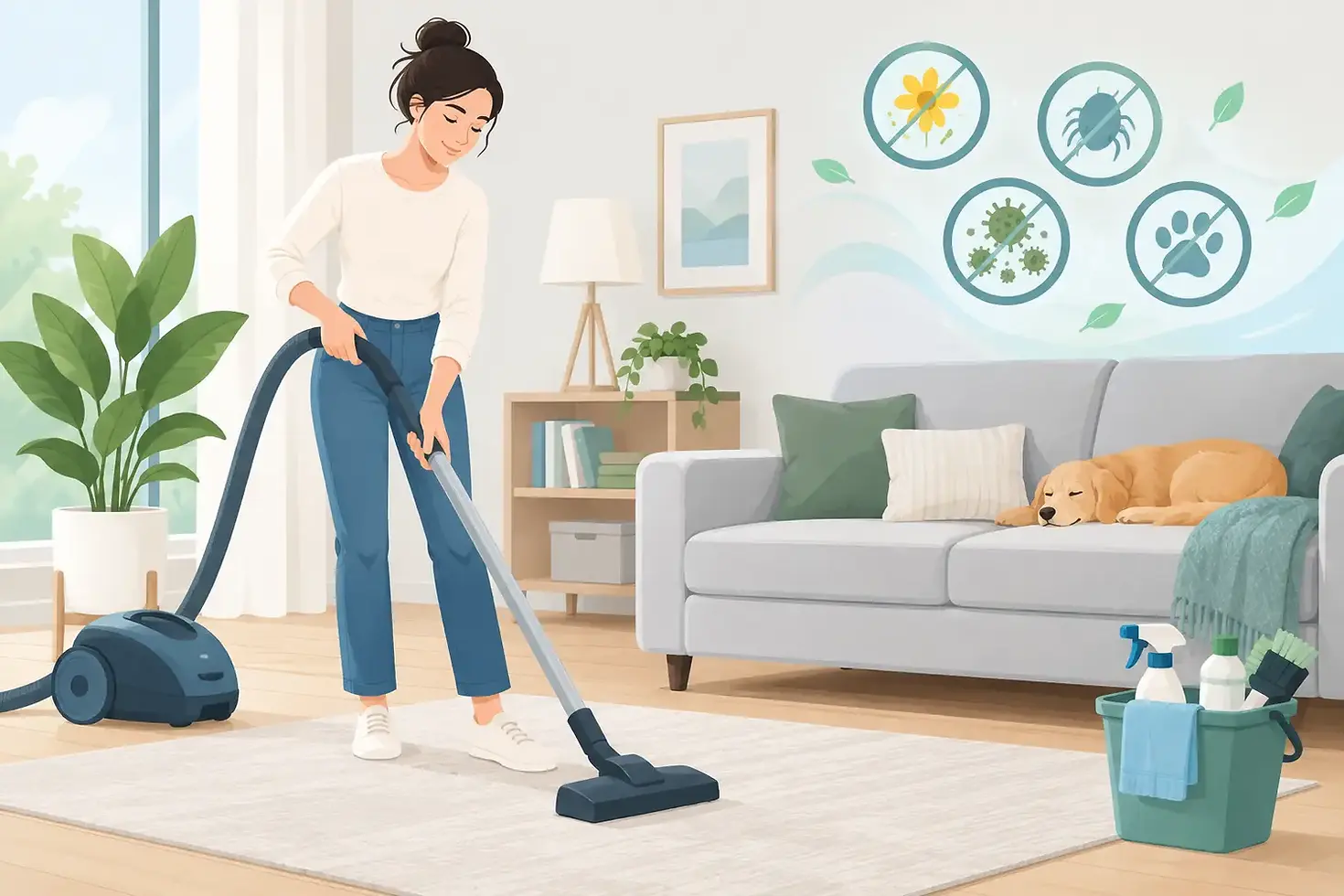
A sneezy morning, itchy eyes on the sofa, or a child who coughs more at night can make a home feel less restful than it should. So, can cleaning help allergies? Often, yes. Thoughtful cleaning can reduce the dust, pollen, pet dander and mould spores that build up indoors. It will not cure an allergy, but it can make the home easier and more comfortable to live in.
The goal is not a harsh, chemical-heavy scrub of every surface. For many Melbourne households, it is a steadier routine that removes allergens before they are stirred into the air, paired with a few small changes that make a real difference.
How Cleaning Can Help Allergies at Home
Allergies are a reaction to substances that are usually harmless, such as dust mites, pollen, animal dander or mould. These particles settle where everyday life happens: in bedding, rugs, upholstered furniture, curtains, floors and window tracks. Walking through a room, sitting on the couch or making the bed can send them airborne again.
Cleaning lowers the amount of allergen sitting in these places. The benefit depends on the trigger and on the method. A quick dry dust can simply move particles around, while a damp microfibre cloth captures them. A vacuum without good filtration can release fine dust back into the room, while a well-maintained vacuum with a HEPA filter is much more useful for allergy-prone homes.
It also helps to keep expectations sensible. Cleaning cannot stop pollen coming in on a windy spring day, and it cannot replace advice from a GP or allergy specialist. But reducing indoor exposure may mean fewer irritations between appointments, especially for people who spend lots of time at home, children playing on the floor, and anyone with asthma.
Start With the Places Allergens Settle
When time is short, focus on the areas that hold allergens rather than trying to clean every corner at once. Bedrooms usually deserve first priority because we spend so many hours there.
Make the bedroom a lower-allergen space
Dust mites thrive in warm, humid fabrics, and their allergens are commonly found in mattresses, pillows, doonas and bedding. Wash sheets, pillowcases and washable covers regularly in hot water, ideally around 60°C if the care label allows it. Dry everything thoroughly before making the bed again.
Vacuum mattresses and fabric bedheads gently with an upholstery attachment, and wipe bedside tables, lamps and skirting boards with a slightly damp microfibre cloth. If possible, choose washable blinds or simpler window coverings in a bedroom where allergies are troublesome. Heavy curtains can hold dust, although they can still work well when they are vacuumed and laundered regularly.
A mattress or pillow protector may be worthwhile for some households. It is not a substitute for washing bedding, but it creates one more washable barrier between the sleeper and the material underneath.
Give floors and soft furnishings proper attention
Carpet, rugs and lounges can collect an impressive amount of dust, dander and pollen. Vacuum slowly rather than rushing over the floor. A slower pass gives the vacuum time to lift particles from carpet fibres, particularly around beds, under couches and along edges where dust gathers.
Hard floors need more than a quick sweep. Sweeping can lift fine dust into the air, so vacuum first where possible, then use a damp mop that is clean rather than spreading yesterday's dirt around. Washable rugs should be cleaned according to their label, while larger rugs and carpets may need periodic professional carpet cleaning.
Upholstered furniture is easy to overlook. Vacuum cushions, arms and underneath the cushions, where pet hair and crumbs collect. Leather or vinyl furniture is simpler to wipe down, but avoid leaving surfaces overly wet, especially near seams.
Clean high and low, not only what you can see
Allergens do not stay at eye level. Ceiling fans, air-conditioning vents, tops of cupboards and light fittings can hold dust that falls when the fan or system is running. Skirting boards, window sills and behind furniture collect it at the other end of the room.
Work from high to low so you are not re-cleaning the same floor twice. A damp microfibre cloth is usually enough for routine dusting. For awkward spots, a vacuum brush attachment is often kinder to the surface than spraying cleaner everywhere.
Be Strategic During Pollen Season
For many people across Melbourne, spring pollen can make symptoms worse even when the home looks spotless. Pollen rides in on clothes, shoes, hair, pets and open windows. It is not realistic to block it completely, but a few habits can reduce how much makes its way through the house.
On high-pollen days, keep bedroom windows closed when practical and air rooms at times when pollen levels are lower. Leave shoes near the entry instead of tracking outdoor dust through the home. Changing clothes after time in the garden, showering before bed and wiping pets after outdoor play can also help keep pollen out of bedding and lounge areas.
Doormats matter more than they get credit for. Vacuum them often and wash washable mats. A clear entry routine is particularly helpful for busy families, because it limits what gets carried from the footpath to the bedrooms.
Do Not Ignore Damp and Mould
Mould is different from ordinary dust. It can grow where moisture lingers, including bathrooms, laundry areas, window frames and behind large furniture placed against a cold external wall. Its spores can irritate airways and may aggravate allergy and asthma symptoms in sensitive people.
The first job is to address the moisture source. Use exhaust fans, open a window when weather allows, dry wet towels and bathroom surfaces, and repair leaks promptly. Cleaning visible mould without fixing ongoing condensation or water damage is likely to be a short-term solution.
Small areas may be manageable with appropriate protective gear and a suitable cleaner, following product directions. Avoid dry brushing mould, which can spread spores. Larger patches, recurring mould, or mould linked to water damage deserve professional assessment. This is especially true if someone in the home has asthma, a weakened immune system or severe respiratory symptoms.
Lower-Chemical Does Not Mean Lower Standard
Strong fragrances and harsh sprays can be irritating for some people, even when they are not the cause of an allergy. For day-to-day cleaning, mild products, unscented options and simple damp-cloth methods are often enough. Use only the amount needed, ventilate the room, and never mix cleaning products.
There is a trade-off. Kitchens, bathrooms and areas affected by illness may sometimes need a disinfectant, while routine dust removal does not. Cleaning first is essential, because disinfectant works poorly through a layer of dirt. The best approach is targeted rather than excessive: choose the right product for the job, then store it safely away.
A Routine That Is Easier to Keep
An allergy-friendly home is not one that is cleaned perfectly every day. It is one with a manageable rhythm. Bedrooms and floors may need attention weekly, with bedding washed regularly and entry areas cleaned more often during pollen season. Deep tasks, such as curtains, behind appliances, carpets and window tracks, can be worked into a monthly or seasonal clean.
If cleaning leaves you exhausted, or the allergens seem to return as quickly as you remove them, extra help can be genuinely useful. A dependable cleaner can handle the detailed work that is hard to fit around work, family and rest, while you keep a simple routine going between visits. Mum and Me Housekeeping approaches this kind of home care with lower-chemical options and the respect a personal space deserves.
The most helpful change is usually the one you can repeat. Start with fresh bedding, slower vacuuming and a damp cloth in the rooms you use most. A calmer, cleaner home may not remove every trigger, but it can give everyone inside a little more breathing room.


Comments